
No products in the cart.
A Different Challenge. Every Single Day.
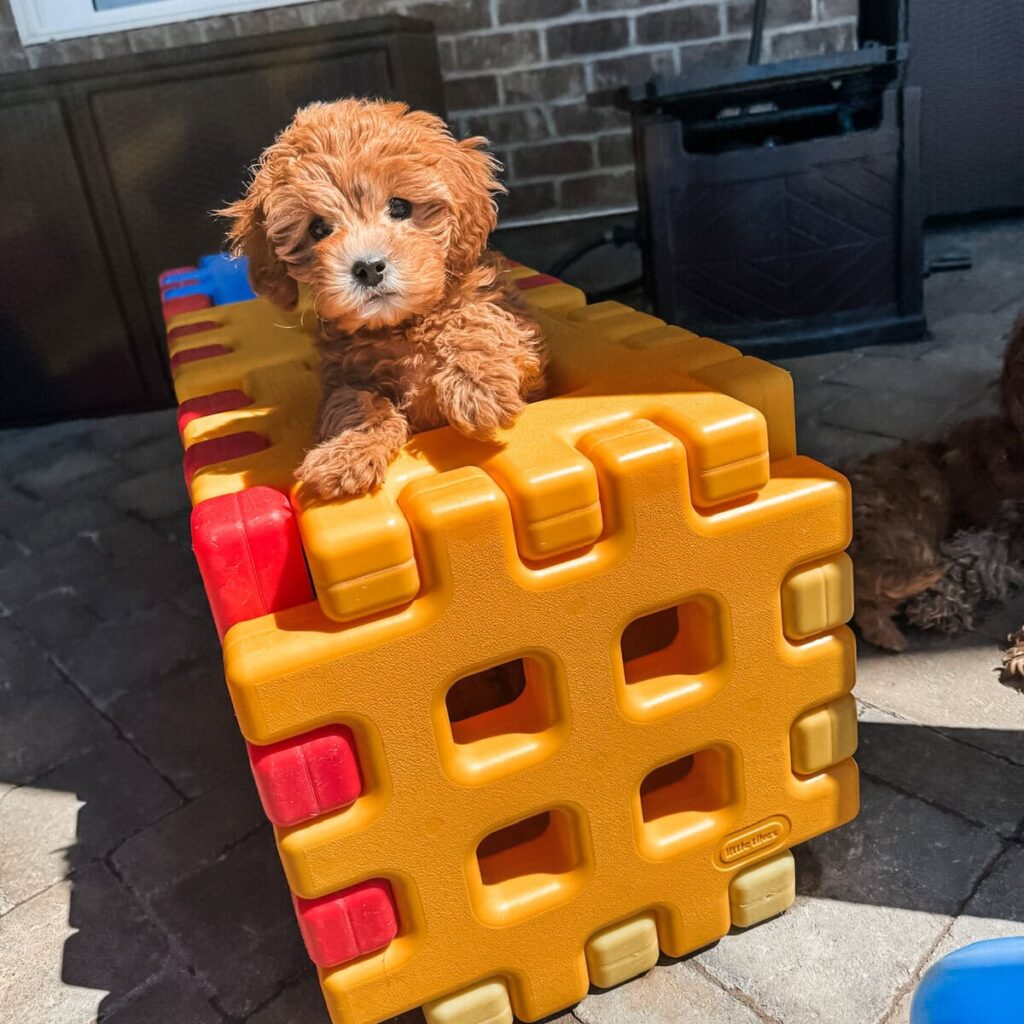
During the most critical window of brain development — weeks 3 through 8 — we don’t run the same routine twice. Every day brings new textures, sounds, challenges, and sensory experiences designed to build a confident, adaptable, unshakeable dog.
DailyNew
Enrichment Experiences
4
Developmental Environments
Wks 1–8
Structured from Day One
Zero
Cookie-Cutter Days
The Brain Builds Itself on What It Encounters. We Make That Count.
The first few weeks of a puppy’s life are an incredibly important period for learning and development. During this time, puppies are naturally curious and increasingly ready to explore the world around them.
Simply repeating the same environment and routine every day can limit the variety of experiences a puppy encounters. Thoughtful enrichment introduces new sights, sounds, textures and experiences in a gentle and age-appropriate way, helping puppies build confidence and become comfortable with the everyday world.
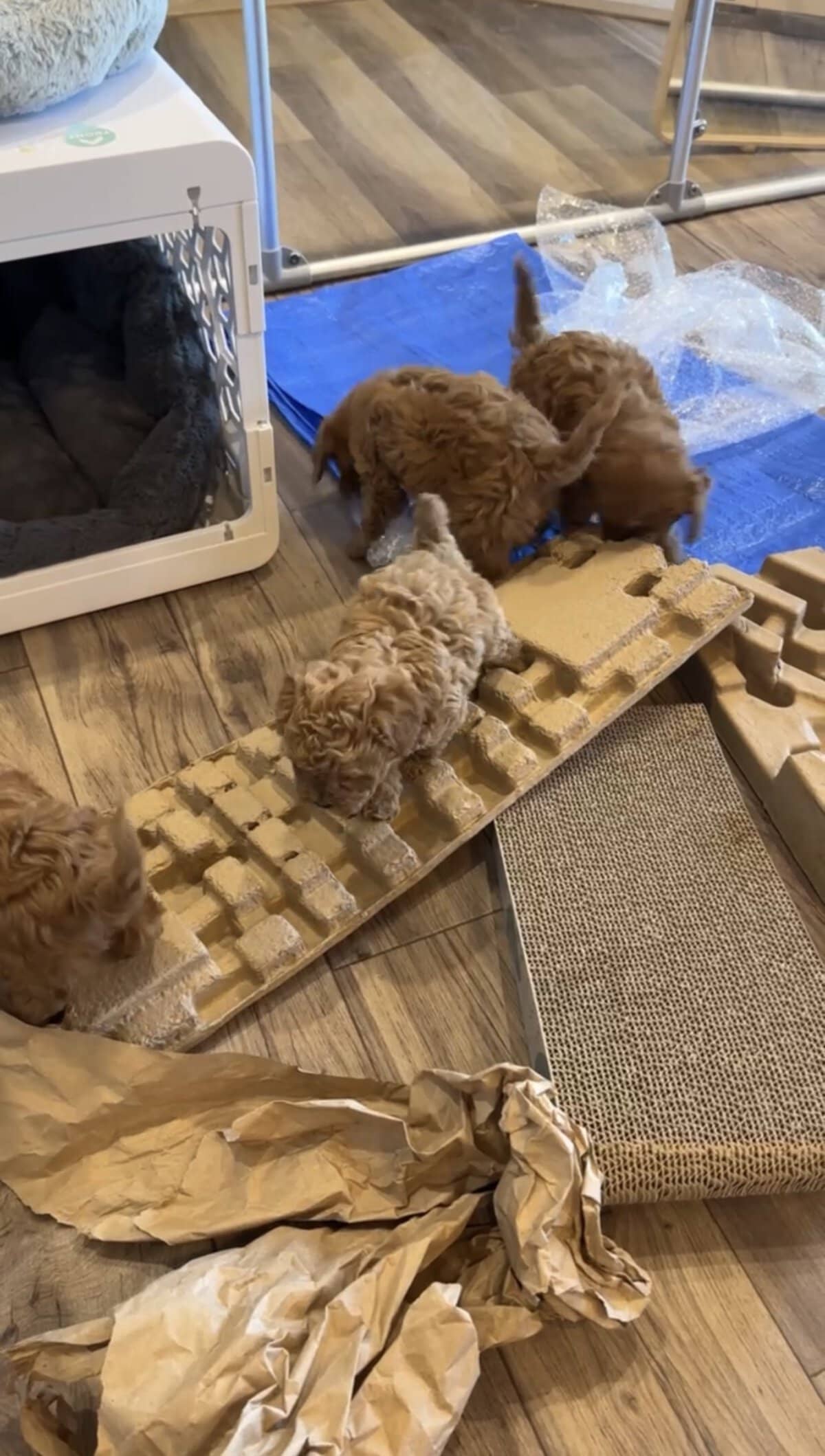
At Splendid Paws Co., we thoughtfully vary our puppies’ enrichment experiences as they grow. They may encounter different surfaces underfoot, new sounds, interesting objects, age-appropriate challenges and opportunities to explore their surroundings.
Each experience is introduced carefully and positively, with consideration for the individual puppy and their stage of development. Our aim is not to overwhelm them, but to gently encourage curiosity, confidence and adaptability.
We believe these small experiences can help provide a wonderful foundation for life with their future family.
''The experiences a puppy has between 3 and 8 weeks of age begin to shape the dog they become- laying the foundation for confidence, resilience, and lifelong behavior.'' The foundation of our puppy enrichment philosophy
Where Enrichment Happens — Stage by Stage
Weeks 1–4. The Whelping Box
Life begins here. In weeks 1 and 2, we focus on Early Neurological Stimulation (ENS) and Early Scent Introduction (ESI) — small, deliberate exercises that build stronger stress tolerance and greater resilience. By weeks 3 and 4, whelping box novelty items begin appearing — different textured, gentle non moving objects. The goal: teach the brain that new things are interesting, not scary. My whelping box is connected to a bedroom. I sleep next to the litter so they are monitored through the night.
WEEKS 4–5. THE TODDLER AREA & PLAYROOM
Around week 4, as the puppies become more confident and mobile, they begin to explore a larger environment with more opportunities for movement and discovery.
At this stage, we focus on developing coordination, balance and body awareness through age-appropriate activities. Puppies are encouraged to climb, navigate different surfaces and explore gentle changes in their surroundings. These experiences help them become more confident using their bodies and approaching new challenges.
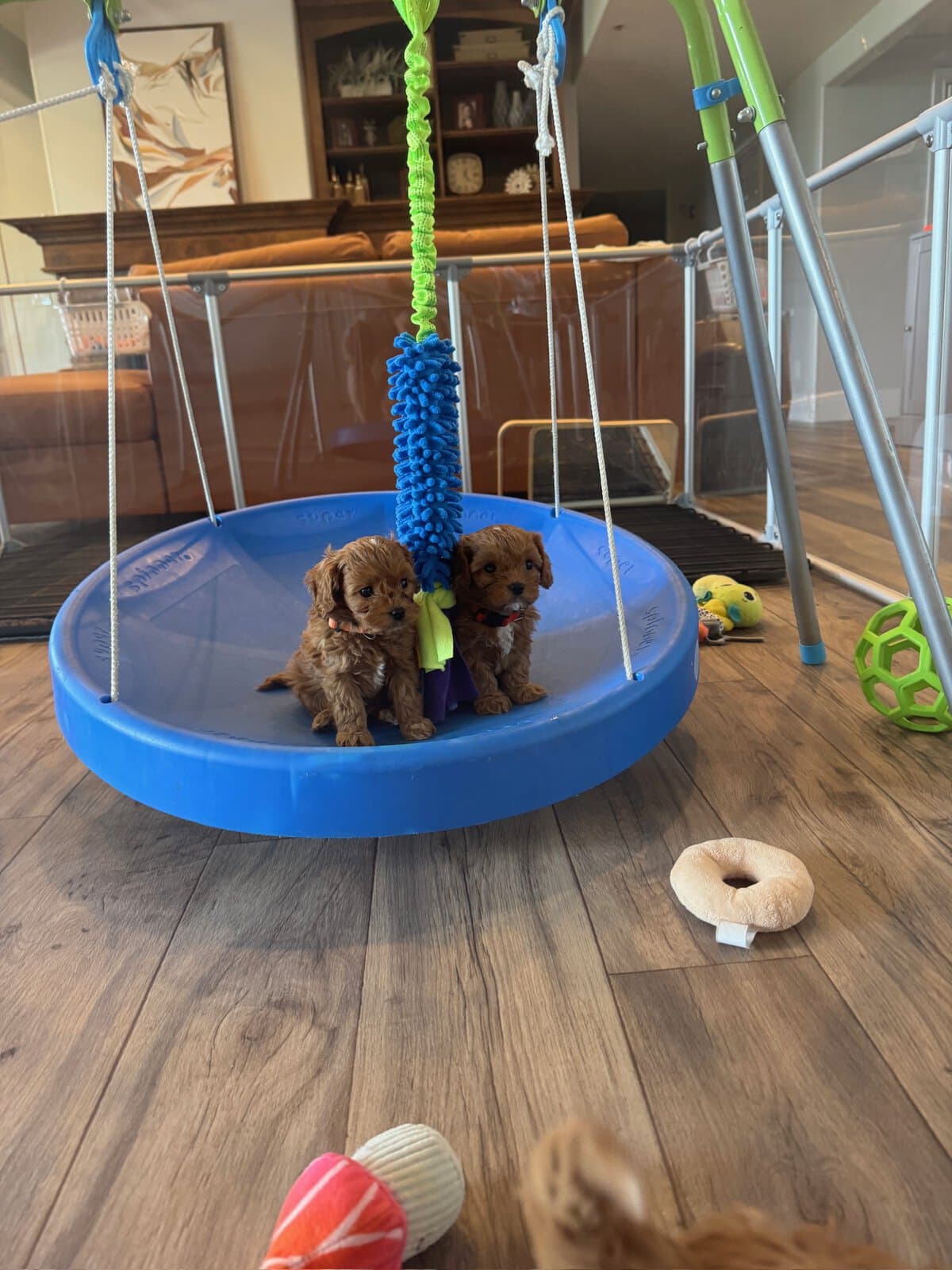
A wobble disc is introduced to provide gentle rocking and balancing experiences, helping puppies become familiar with movement and changes in their surroundings.
As their confidence develops, puppies are also introduced to a specially designed indoor dog door, begin age-appropriate crate training and experience a variety of everyday sounds and music throughout the day.
Everything is introduced gradually and positively, with the aim of making new experiences feel normal, interesting and rewarding.
Weeks 5–8. The Home Environment
By week 5, puppies join us in the main puppy area — the richest puppy enrichment environment we have. Real household sounds, varied human interaction, different smells, and the full unpredictability of home life. The vacuum runs. The doorbell rings. Puppies are in the heart of the home. Sound and motion enrichment intensifies here — always introduced at low levels first. We never flood. We always set them up to succeed.
Weeks 6–8. The Outdoor Area
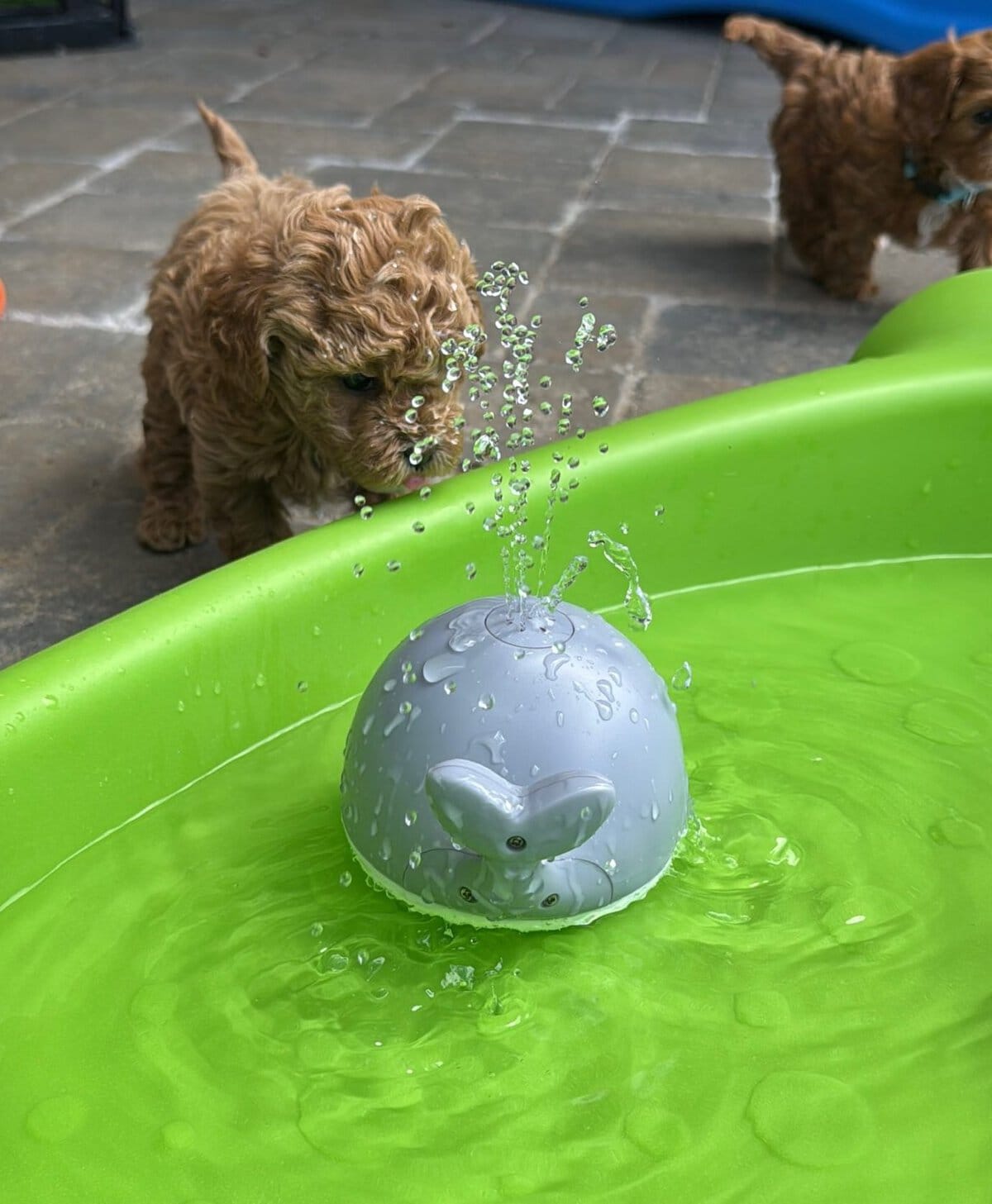
Our puppies are introduced to a dedicated outdoor space designed for both safety and development. A large paver patio provides a clean, stable surface, along with a designated potty area. Outdoor enrichment includes exposure to outdoor sounds, smells, and the stimulation of being in a bigger, less controlled environment. Here, puppies explore while building confidence through structured outdoor exposure.
The Enrichment Items We Rotate- Any Why Each One Matters
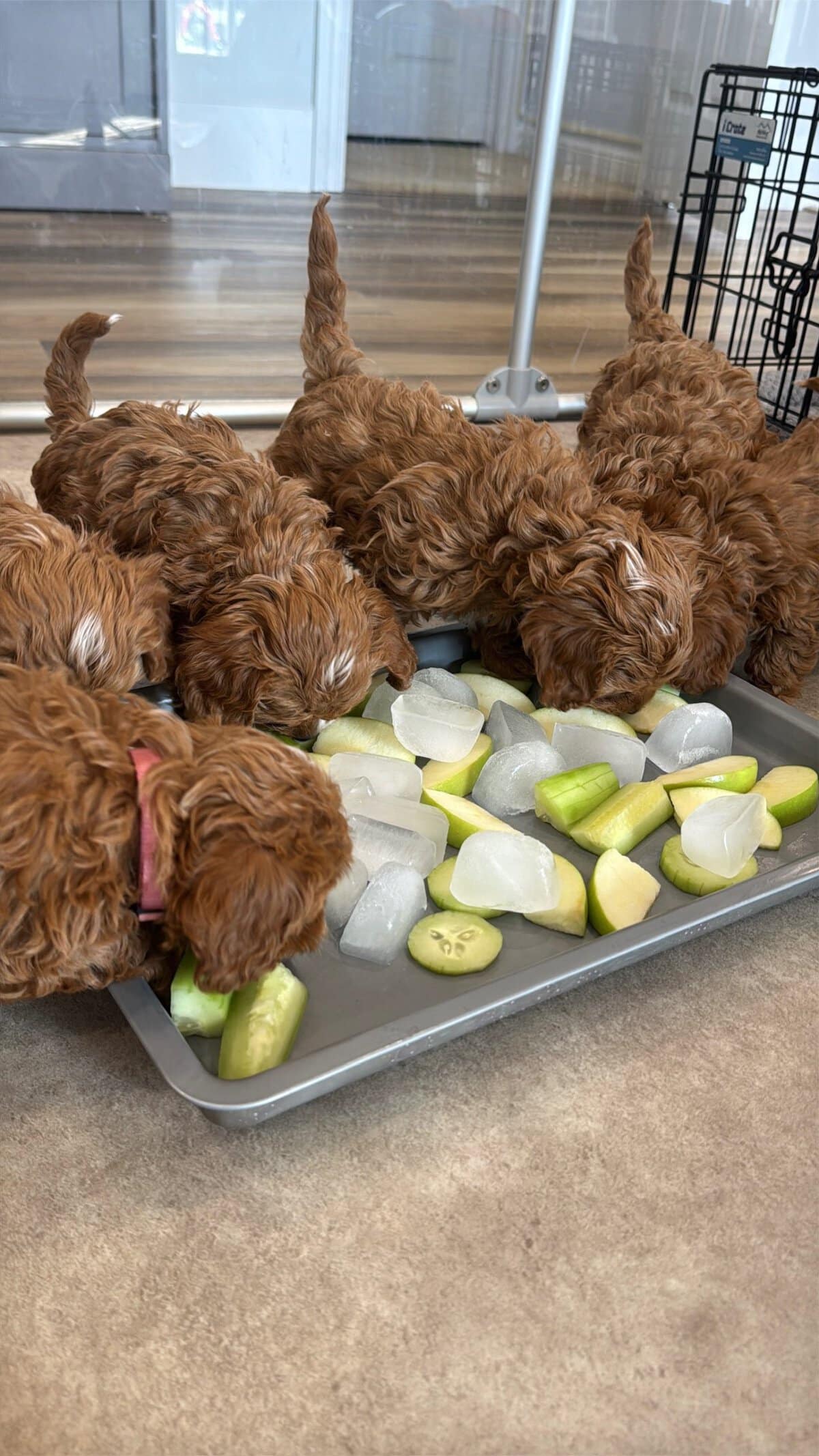
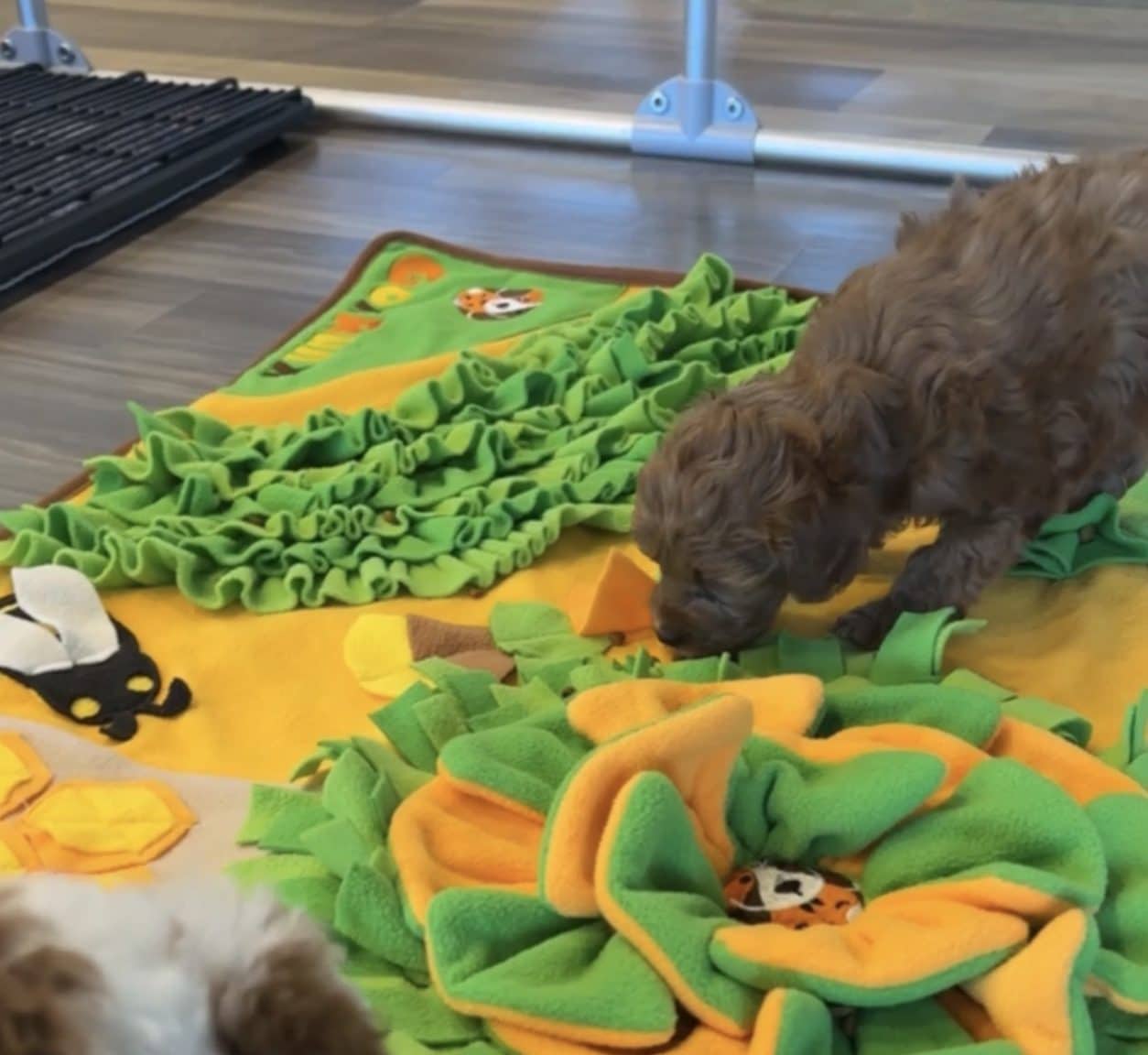
What Daily Enrichment Actually Produces
01. Adaptability
A puppy raised on novelty expects the world to be interesting. New environments, new people, new routines — these aren’t threats. They’re just the next thing to explore.
02. Resilience
Puppies who have encountered mild challenges and come through them positively build a stress response that bounces back quickly. They’re not unaffected — they’re equipped.
03. A Smoother First Week Home
The families who report the easiest transitions are the ones whose puppies already knew what a vacuum sounds like, what a car feels like, and what a crate means. Puppy enrichment is the prep work.
What Families Ask About Our Cavapoo Puppy Enrichment Program
Every family deserves honest answers. Here are the questions we hear most.
What is a puppy enrichment curriculum and why does it matter?
A puppy enrichment curriculum is a structured, intentional plan for exposing puppies to new experiences during their critical developmental window. Rather than leaving puppies to develop passively in a pen, a curriculum ensures that each day brings age-appropriate novelty — new textures, sounds, challenges, and interactions. The brain builds itself on what it encounters. A good curriculum makes sure what it encounters is rich, varied, and positive.
Why do you start with large motor skills before sound and motion?
Developmental sequencing matters. A puppy with a strong physical foundation — good body awareness, balance, and motor coordination — handles new sensory input with more stability. We don’t want to overwhelm puppies with motion and sound when they’re still figuring out how their body works. Large motor work comes first because it builds the physical confidence everything else sits on top of.
Why is a wobble disk and swing used to prepare for car rides?
The wobble disk and the swing engages the vestibular system — the part of the brain that processes balance and motion. When a puppy has spent time on an unstable, rocking surface and learned that motion is safe and normal, the movement of a car ride isn’t a shock to their system. Many puppies who struggle with car sickness simply never had positive motion exposure before that first ride. We take care of that before they ever step foot in your vehicle.
Why is exposure outisde of the home part of your puppy enrichment program?
Early development is when puppies are most open to new experiences. By thoughtfully introducing them to new environments beyond the home, we help build resilience, adaptability, and confidence. These experiences reduce fear later and create puppies that settle more easily into family life.
What programs does your curriculum comes from?
Our enrichment curriculum is built on Puppy Culture (Jane Killion), the Empowered Breeder / Badass Breeder framework, and Baxter & Bella online puppy training. We also draw from The Puppy Brain and our own years of hands-on experience. We don’t follow any one program rigidly — we use what the research and our own puppies have shown to be most effective.